Buying a smart gym on Amazon vs a distributor: what nobody tells you
Published on May 12, 2026 · 6 min read
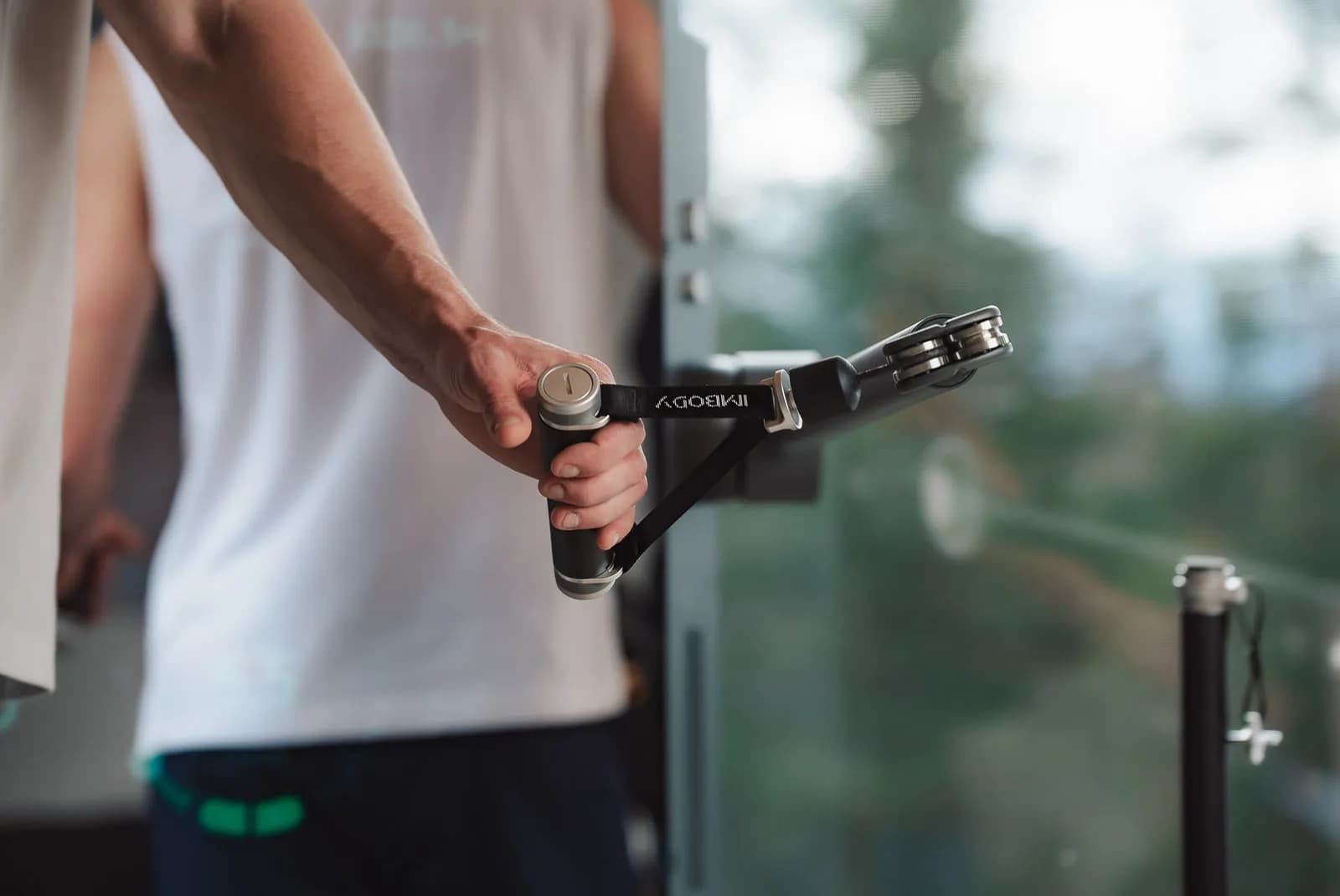
An awkward confession to open with: the machine we distribute, the Prodigy IMBODY Power S Pro, is also sold on Amazon. We link the listing from our own website. So this article isn't about "Amazon bad, distributor good" — it's about what exactly you buy in each place when the product weighs 110 kg, costs €4,899 and belongs to a category you've probably never tried.
What Amazon does brilliantly
Let's be fair, because half the "vs Amazon" articles in this sector are pure commercial fear-mongering:
- Process trust: you know how it works, payment is protected and the return policy is familiar.
- Speed of decision: one click and done, no talking to anyone.
- Visible price: no "request a quote," no sales reps.
For a book, some headphones or a €20 pair of dumbbells, Amazon is unbeatable and there's no debate to have.
Where the model creaks: 110 kg, four-figure products
The marketplace is optimised for parcels, and a smart gym isn't a parcel. The concrete friction points:
- The demo doesn't exist. No one lets you feel the digital resistance before paying. In a new category, buying without trying is betting €4,899 that strangers' reviews apply to your case.
- Delivery is "to the door," not "working on your wall." Assembled, the machine weighs 110 kg and anchors to the wall. On Amazon, the courier leaves and the nearly six-foot crate sits in your hallway staring at you.
- The return is your logistics problem. The 30 days exist, but re-packing and moving a 146 kg crate isn't returning a pair of trainers.
- Support is a form. The app won't pair? An arm makes a strange noise at eighteen months? The legal warranty exists, but a marketplace seller executes it — sometimes from another country, sometimes vanished.
- The seller may not be who you think. On import listings, between the Chinese manufacturer and your living room there can be two middlemen who answer for nothing. Always check the "sold by".
A first-hand note on information reliability: for months, listings of this product on Amazon Spain have shown resistance specs different from the maker's official sheet (100 kg where it's 120). We spotted it because it's our product; the average buyer has no way of knowing.
What you buy when you buy from a distributor
Buying directly from the official store — with official sales and support in Spain — costs the same as the list price. The difference is in everything around the price:
- A demo before paying: at a showroom, at your place or over video call. Twenty minutes with the cables in your hands are worth more than a hundred reviews.
- Delivery in 1–2 business days and installation: the machine ends up anchored and working, not in the hallway.
- 30-day returns with collection: if it doesn't fit, we collect it; the logistics problem is ours.
- Warranty and support with a face in Spain: the same company that did your demo answers the phone two years later.
- Financing with a personalised assessment: a monthly payment instead of a lump sum, calculator included on the website.
- Pay how you prefer: card or transfer, in an own store with the same VAT and Spanish invoice.
None of this appears in the listing price, and all of it is what you miss when something goes wrong.
The practical rule
- A cheap, familiar, light product? Amazon, without thinking.
- An expensive product, new to you, that needs installation? Buy where you can try it first and complain afterwards to a person with a name. If you still prefer the marketplace, do it with your homework done: a verified seller, specs cross-checked against the official sheet, and the return policy read to the end.
We win either way whether you buy from us in one place or the other — that's why we can afford this advice. But if you want to decide the way you decide a four-figure purchase well, start where you'd start with a car: driving it first.