0.1 m²: the gym that fits where a mirror fits
Published on March 17, 2026 · 6 min read
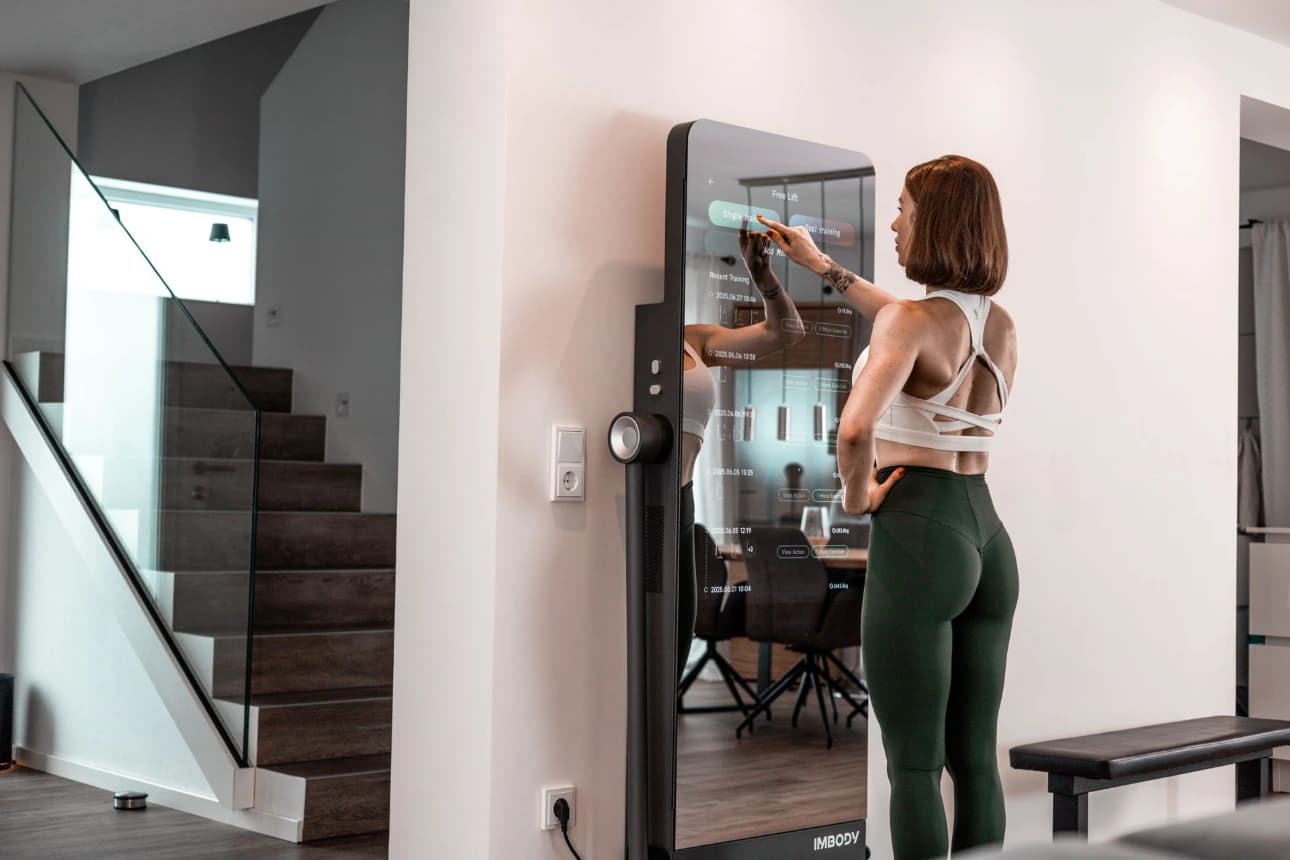
There's a reason 90% of "home gym" articles are useless to you: they assume you have a spare room. In the average Spanish flat there's no spare room. There's a living room that already doubles as an office, a bedroom with wardrobes measured to the centimetre and, with luck, a wide hallway. The real question isn't "which machine to buy," it's where on earth you put it.
This article is about that: training strength seriously in 0.1 m² — the footprint of a mirror leaning against the wall.
The problem with everything else
Let's review what classic strength equipment takes up:
- Rack + barbell + plates + bench: the serious old-school option demands a dedicated room, a reinforced floor and accepting that the room isn't coming back. In a rented flat, flatly unworkable.
- Plate-loaded multi-gym: 2 to 4 real m² counting the usage space, and a machine-room aesthetic that doesn't survive in a living room.
- Adjustable dumbbells + folding bench: the honest compact option, but limited on cable exercises (pulldowns, rows, crossovers) and on fine progressive loading.
- Tower-format digital-resistance machines: better, but they still ask for their permanently set-up zone.
The pattern: the more complete the training, the more metres it demands. Until resistance stopped needing iron.
What changes when the load comes from a motor
The Prodigy IMBODY Power S Pro generates its 120 kg with two electric motors, not plates. And without plates, the machine can be flat:
- Switched off: a full-length mirror. It doesn't "look like" furniture — it is furniture, and the useful kind. No one who walks into your living room will know a gym lives there.
- Switched on: a 43" touchscreen behind the glass, two cable arms adjustable in 2 horizontal and 7 vertical positions, and the 8 accessories (bars, handles, rope, bench) stored in any cupboard.
- Footprint: 0.1 m² of contact. The usage zone in front of the mirror is the same you'd need for a yoga mat — and unlike the rack, that zone is still your living room the rest of the day.
The bench turns the whole thing into a rowing machine for cardio, and it's put away as easily as it's taken out. It's the difference between "having a gym at home" and "living in a gym".
Where people are putting it
Of the demos and installations we do, three locations win by a landslide:
- The living room, the most common: a free wall next to the TV or in the gap between windows. The mirror visually enlarges the room — décor and equipment at once.
- The bedroom, the getting-dressed mirror that also trains: the favourite spot for anyone who works out at 6:30 before the house wakes up.
- The office/study, for the remote worker who swaps the chair for the cable between meetings. Ten-minute sets between calls add up to more than the epic session that never comes.
All it asks for is a wall to anchor to and a plug. The unit weighs 110 kg assembled — installation included with delivery, not an Ikea flat-pack for Sunday afternoon.
"And does it really train the same as taking up 20 m²?"
For cable strength and guided classes: yes — nearly 1,000 exercises and over 350 classes built in, from press to deadlift by way of the whole cable catalogue that at your gym is spread across six machines. The maker sums it up as 260 machines in one; our honest version is in the comparison, including the row for what a mirror doesn't replace (the barbell loaded to the max, the pool and the gym mates).
And if the price per square metre in your city is what brought you to this article, think of it this way: a room dedicated to a gym costs, at Madrid or Barcelona rental prices, hundreds of euros a month in metres. The mirror trains in metres you'd already paid off.
The best way to believe it is to see it off and on in a real home: book a demo — at a showroom, at your place or over video call — and measure the gap yourself when you get back.