What the gym really costs you (do the full sum)
Published on March 31, 2026 · 6 min read
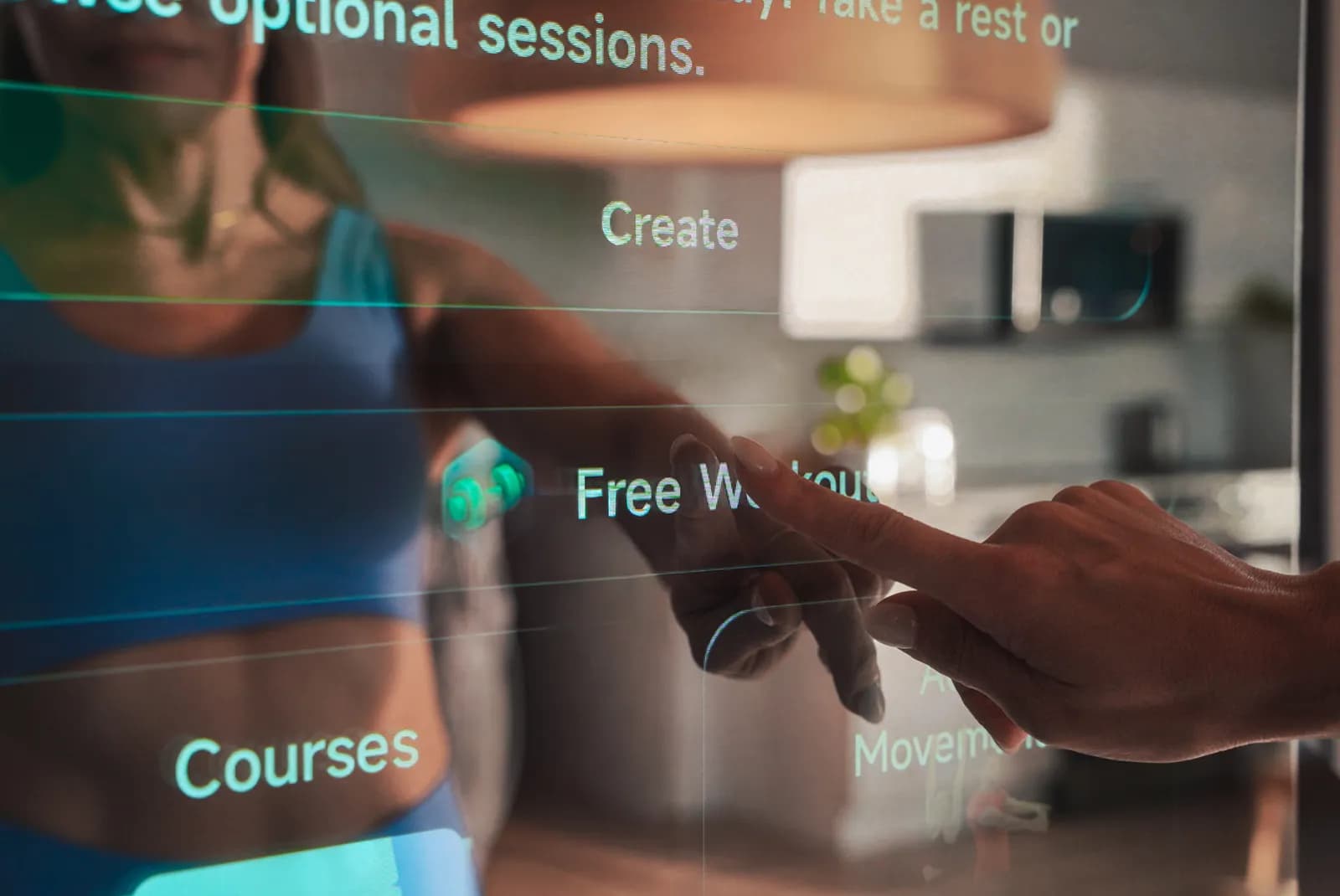
Nobody works out what the gym costs them. You pay the fee the way you pay Netflix: on autopilot, month after month, year after year. But when the bill goes up against a one-off four-figure purchase — a smart gym for home — it's worth doing the full sum. Let's do it with Spanish figures and no tricks in either direction.
The fee is only the entry ticket
An average gym in Spain costs between €30 and €80 a month depending on city and tier. Let's take €50 as a reasonable reference:
- 1 year: €600
- 5 years: €3,000
- 10 years: €6,000
And that's one person. If two of you train at home, double it: €12,000 per decade. The fee seems small because it's sliced up; added together, it's the price of a used car.
The costs that don't show up on the bill
- The commute. If the gym is 15 minutes away, every session is 30 minutes of time toll. At 3 sessions a week, that's around 78 hours a year — two full working weeks — just getting there and back. Value your hour however you like; free it is not.
- Sign-up and extras. Registration, towel, padlock, water, the café afterwards. Small, constant.
- The phantom months. The industry's awkward figure: a huge share of fees is paid without setting foot in the gym — August, exam season, that quarter with the impossible project. The gym charges all the same; your consistency doesn't.
The fee buys access, not training. Every session you skip makes the ones you do more expensive.
The other side: what training at home costs
Let's be just as hard on our own option. The Prodigy IMBODY Power S Pro costs €4,899 (VAT included), one-off payment:
- No monthly fee: the nearly 1,000 exercises and over 350 classes are built in, with no mandatory subscription. This matters, because part of the category (Tonal, Peloton) chains the machine to a monthly payment — with a mandatory fee, you never really stop "paying for a gym".
- Electricity: two 750 W motors working for the length of your session; cents per workout, not euros.
- Maintenance: no plates, no weight stacks, no steel cables to grease like a classic multi-gym. Motors with a stated service life of 10,000 hours — about 13 years at 2 hours a day.
The crossover: when it pays for itself
Using the €50/month per person reference:
- One person: the machine breaks even around year 8. It exists, but it's a weak argument — we're not going to dress it up as a bargain.
- Two people at home: break-even around year 4. Here the number speaks for itself.
- Two people at a €70–80/month gym: around 3 years.
A €30 fee and you train alone? The gym is cheaper for many years, and if you also love going, there's no debate: keep going. This article isn't about convincing anyone who already has a happy routine, it's about stopping the real number from staying hidden.
What the pure calculation doesn't capture: the machine at home removes the number-one reason people quit (the commute) and trains the whole household with no extra fee. A machine three metres from the sofa gets used; a fee 15 minutes away, sometimes.
If the one-off payment is the barrier
It's the logical objection: €50/month hurts less than €4,899 at once, even if it works out worse. That's what financing with a personalised assessment is for: the website calculator gives you the rough monthly payment by term in 10 seconds, and in many scenarios it lands in the range of what you already pay for a gym at home — with the difference that one day it ends.
Do your number: fee × 12 × years × people in your household. If the result makes you uncomfortable, look at the machine or just work out your payment. The local gym will still be there; your €6,000 of the next decade, depending on what you decide.