How to set up a home gym in 2026 (a budget guide)
Published on March 3, 2026 · 8 min read
Setting up a home gym in 2026 can cost anywhere from €300 to over €10,000, and the most expensive mistake isn't overspending: it's buying kit that turns into a clothes rack in three months. This is the guide we give people who visit us at demos — valid even if you buy nothing from us.
Step 1: decide what you train, not what you buy
The kit picks itself once the list of goals is clear:
- General strength / aesthetics (most people): you need progressive resistance for push, pull and legs. Cables, dumbbells or a barbell — the medium doesn't matter, the progression does.
- Maximal barbell strength: heavy squats and deadlifts call for a rack, an Olympic barbell, plates and a technical floor. That's another league of space and noise.
- Cardio: rower, bike or treadmill. The rower is the most complete and the one that bothers the neighbours least.
- Mobility / guided classes: a mat and a screen with content that makes you come back tomorrow. Consistency is 90% of the result.
Step 2: the real space (not the Pinterest one)
Measure before buying. Honest references:
- A free 2×2 m corner: enough for adjustable dumbbells, a bench and bands. The classic "bedroom gym."
- A dedicated room (6–10 m²): fits a plate multi-gym or a rack with a barbell. Count the ceiling: a cage needs 2.2 m minimum.
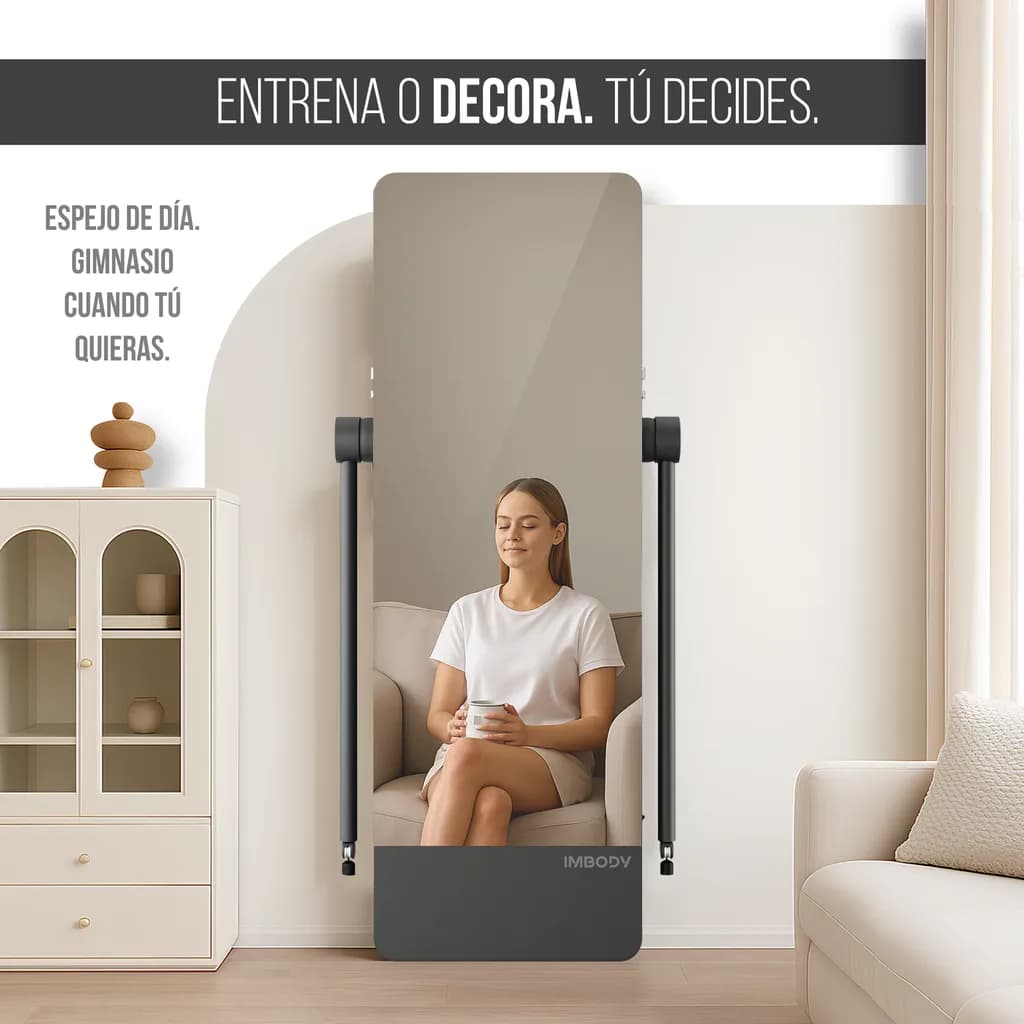
- A normal living room: this is where the format has changed. A smart gym mirror takes up 0.1 m² of floor and switched off is literally a mirror — serious equipment stopped demanding its own room. We've written separately about training hard in small flats.
Two details nobody mentions: the floor (20 mm rubber tiles save the flooring and the neighbours with iron; with digital resistance you don't need them) and the noise — plates sound like plates; an electric motor doesn't.
Step 3: budget by tier
Tier 1 — Functional basics (€300–800)
Adjustable dumbbells, a folding bench, bands and a mat. Covers 6–12 months of progression for a beginner. Limitation: leg and back progression runs out and large adjustable dumbbells end up awkward.
Tier 2 — Iron corner (€1,500–4,000)
A wall-folding rack, an Olympic barbell, 100–150 kg of plates, a serious bench and a technical floor. It's the best €/kg ratio if you have the room, tolerate the noise and are motivated to train alone with no guidance. Add the invisible cost: assembly, and the room ceasing to be a room.
Tier 3 — Smart all-in-one (€3,500–5,000)
A machine with digital weight: electric motors instead of plates, five resistance modes, built-in exercises and classes and AI correction. The Power S Pro we distribute: 120 kg, nearly 1,000 exercises, over 350 classes, no subscription — for €4,899 (financeable) you get the machine, the content and the coach in 0.1 m². Before deciding in this tier, compare: our 2026 smart gym ranking puts every brand's prices and specs in one table.
Which pays off? It depends what you compare it against: the gym costs you €6,000 every ten years in fees — the full number is in that analysis and in the savings calculator.
Step 4: the five mistakes we see every week
- Buying cardio first. The treadmill is the most expensive, the biggest and the first thing abandoned. Strength retains; cardio accompanies.
- 20 kg kit for 60 kg goals. If you progress (you will), short kit is paid for twice.
- Ignoring the noise. Iron at 7:00 is a neighbour dispute in the making. Ask how it sounds before buying.
- No content plan. A rack with no programme is a premium coat rack. What brings you back is the guidance — human, on video or with AI.
- Not trying before spending €3,000+. No one buys a car without driving it. Serious equipment can be tried: book a demo.
The short version
- Small budget: adjustable dumbbells + bench + bands, and start training today.
- A spare room, you like iron and noise isn't a problem: rack + barbell.
- You want the result without giving up a room or fighting your own consistency: an all-in-one with digital weight. Start by understanding the technology and come try it.